 Ballast

How to Weigh Down a Feather Flag or Banner
Feather flags and banner frames catch the wind and topple easily. Here is how to weight the base so they stay upright.
The short answer
Weight the base. Feather flags sit in a cross or spike base and banner frames stand on feet, and none of them hold in wind on their own. A concrete weight sat on the base keeps the flag or banner upright on any hard surface. Taller flags and exposed forecourts need more weight, and on soft ground a spike helps but a weight is still the reliable hold.
Why flags and banners blow over
A feather flag is tall, light and made to flutter, so it catches even a gentle breeze and levers itself over at the base. Banner frames present a big flat face to the wind for the same effect. On a forecourt, pavement or car park you cannot fix into the ground, so the base needs a dead weight to stay put. An unweighted flag in a doorway or by a road is an accident waiting to happen.
How to weight a flag or banner
- Sit a weight on the base. A cross base or spike base takes a block straight on top to hold it down.
- Weight both feet of a banner frame. Do not rely on one end, weight each foot so the whole frame is held.
- More for taller flags. The higher the flag, the more leverage the wind has, so step up the weight.
- Keep it low and central. A weight sat over the base keeps the centre of gravity low where it does the most good.
- Do not trust the base alone. Most flag and banner bases are far too light for a windy spot without extra weight.
Which weight to use
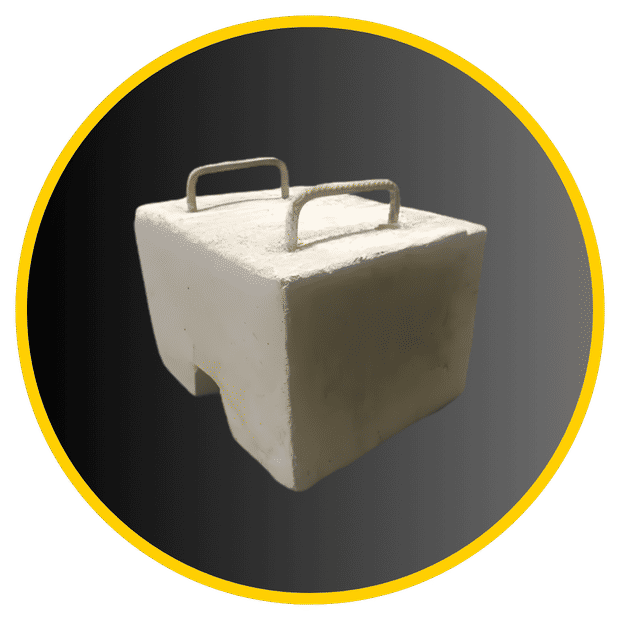
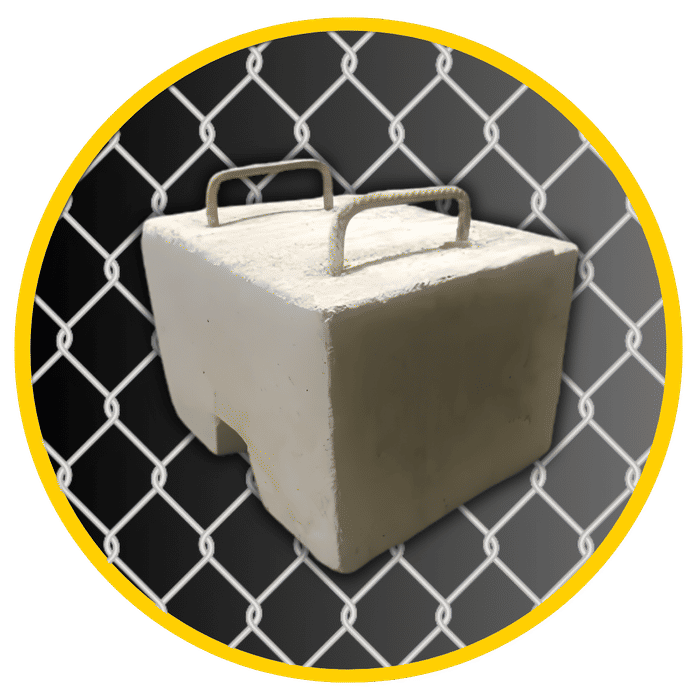
A 40kg block holds most feather flags and banner frames, set straight on the base and carried by hand on its cast-in rebar handle. For tall flags or exposed forecourts, step up or add a second block. See the signage and barrier weights page, or the full products range for every size and price.
Common questions
How do you stop a feather flag blowing over?
Sit a weight on its base. A feather flag is tall and light, so wind levers it over at the base. A concrete block on the cross or spike base holds it upright, on any hard surface where you cannot fix into the ground.
How much weight does a feather flag need?
A 40kg block holds most feather flags. Tall flags and exposed forecourts need more, so step up the weight or add a second block. If in doubt, weight it heavier rather than risk it going over.
Can you weight a banner frame the same way?
Yes. Weight each foot of the banner frame with a block so the whole frame is held down. Banner frames present a big flat face to the wind, so weight both feet rather than one end.
Will it work on a forecourt or car park?
Yes, that is exactly where a weight is needed. On hard standing you cannot use a ground spike, so a concrete weight on the base is the only reliable way to keep a flag or banner upright.
Weights for flags and signage
UK-cast concrete weights for feather flags, banner frames and signage, delivered UK-wide. See the range and prices, or tell us the job for a quote.
Ballast Blocks
UK-cast concrete ballast weights and kentledge for events, construction, fencing, marine and industrial anchoring. A Gala group brand. Visit Gala Tent.