 Ballast

How to Weight Down Temporary Fencing
Heras panels stand in freestanding feet, not the ground, so on hard standing each foot needs a weight. Here is how to ballast a temporary fence line so it holds.
The short answer
Weight the feet of your temporary fence panels, one block per foot. Heras and similar panels sit in freestanding rubber or concrete feet, so on tarmac, paving or compacted ground there is nothing to fix into and the feet can lift or walk in the wind. A concrete ballast block over each foot pins the line down. The more exposed the site, and the more solid the infill such as printed banners or debris netting, the more weight each foot needs.
Why temporary fencing needs weighting
A run of fence panels is a long, flat surface for the wind to push on, and the feet are not fixed to the ground. A strong gust can tip a whole line over, which is a serious hazard around a site, a road or the public. Weighting the feet turns a freestanding line into a stable barrier that stays where you put it.
How to weight a fence line
- One block per foot. Sit a weight over every panel foot, not every other one. A single unweighted foot is a lifting point for the whole run.
- Step up on exposed runs. On open, windy sites use a heavier block, or one on each side of the foot, where the panels take more load.
- Add more for solid infill. Printed banners, shade cloth and debris netting turn the fence into a much bigger sail, so those runs need noticeably more weight than open mesh.
- Keep the line straight and braced. Coupled panels and the odd braced or returned section help the whole run resist the wind, with the weights doing the holding.
Which weight to use
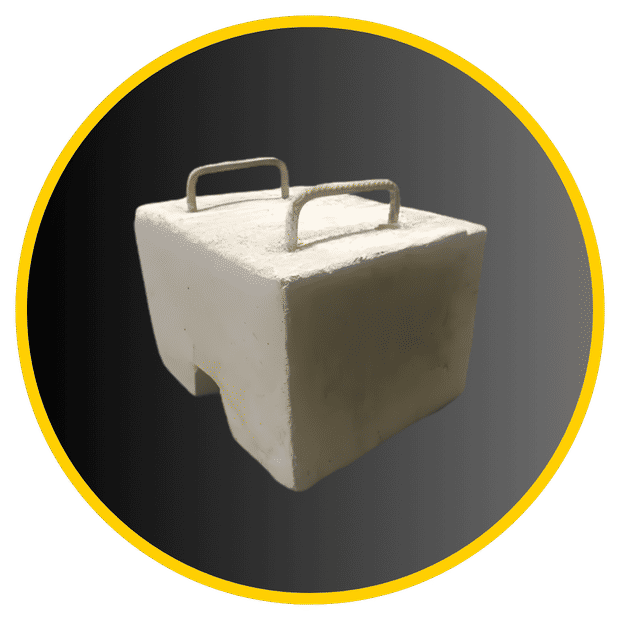
A 40kg block is the everyday choice for fence and Heras feet, carried by hand on its cast-in rebar handle and dropped straight over the foot. For long, exposed or banner-covered runs, step up to heavier blocks or use more than one per foot. See the temporary fencing ballast page, or the full products range for every size and price.
Common questions
How do you stop temporary fencing blowing over?
Weight the feet. Because the panels sit in freestanding feet rather than being fixed to the ground, a block on each foot is what holds the line down. On hard standing it is the only option, since you cannot stake in.
How many weights do I need per fence panel?
As a starting point, one block on each foot, so a panel with two feet takes two weights. Long or exposed runs and banner-covered fences need heavier blocks or more than one per foot. For a specific site, send us the details and we will advise.
Do concrete fence weights fit Heras feet?
Yes. The block sits over or alongside the panel foot to weight it down, so the run holds its line. For an unusual foot or base, send us a photo and we will confirm the fit before you order.
Do I need more weight if the fence has banners or netting?
Yes, noticeably more. Printed banners, shade cloth and debris netting stop the wind passing through the mesh and turn the fence into a solid sail, which greatly increases the load on every foot. Step up the weight on any run with solid infill.
Ballast for your fence line
UK-cast concrete weights for Heras feet, hoarding and site fencing, in sets and full pallets, delivered UK-wide. See the range and prices, or tell us the run for a quote.
Ballast Blocks
UK-cast concrete ballast weights and kentledge for events, construction, fencing, marine and industrial anchoring. A Gala group brand. Visit Gala Tent.